

Direct Anterior Approach (DAA) Hip Replacement
What Is Direct Anterior Approach Hip Replacement?
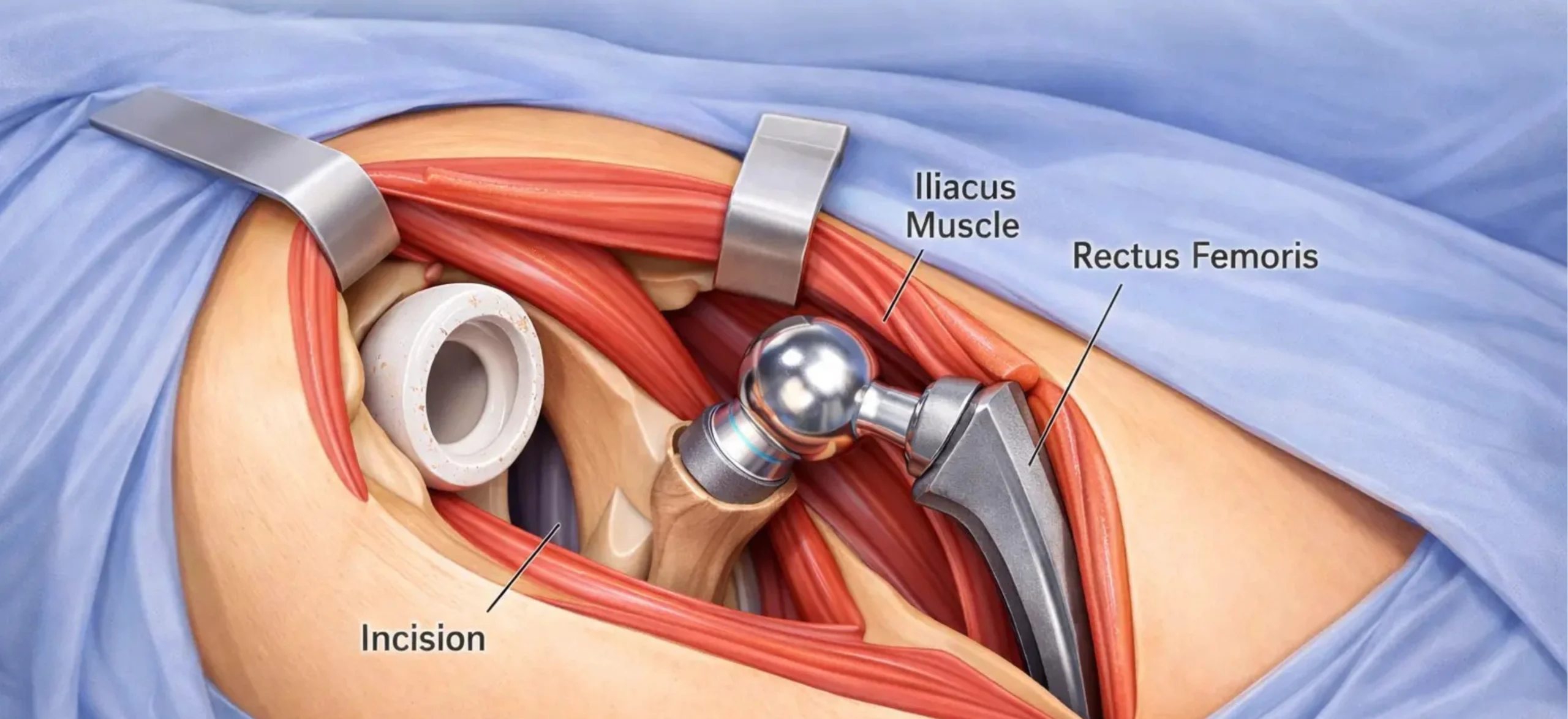
Direct Anterior Approach (DAA) hip replacement is a minimally invasive, muscle-sparing technique used to replace the hip joint. Unlike traditional hip replacement, which involves cutting through major muscles to reach the joint, the anterior approach allows access between natural muscle planes, preserving muscles and tendons. This typically leads to less pain, quicker mobility, and fewer postoperative restrictions.
How the Anterior Hip Replacement Procedure Is Performed
DAA hip replacement is performed under general or regional anaesthesia. The steps include:
You lie on your back on a specialized operating table that helps maintain precise limb positioning.
A small incision, usually around 4 inches long, is made at the front of the hip.
Muscles are gently separated—not cut—to reach the hip joint.
The damaged femoral head is removed, and the acetabulum (hip socket) is shaped using a reamer.
A new acetabular cup is secured in place either by press-fit, screws, or bone cement, followed by insertion of a liner made of metal, ceramic, or plastic.
The femur is prepared, and a metal stem is inserted using either press-fit fixation or bone cement.
A ceramic or metal femoral head is placed on the stem to form the new joint.
The incision is closed and covered with a sterile dressing.
Benefits of the Direct Anterior Approach
Patients undergoing the DAA technique may experience:
Smaller incision
Shorter operative time
Minimal blood loss
Faster recovery
Less postoperative pain
Reduced soft-tissue trauma
Minimal scarring
Earlier walking and movement
Fewer postoperative restrictions
Quicker return to routine activities
Lower risk of hip dislocation
Risks and Possible Complications
While the anterior approach is considered very safe, any surgical procedure carries some risks, which may include:
Infection
Bone fracture
Nerve irritation or damage
Hemarthrosis (bleeding inside the joint)
Deep vein thrombosis (blood clots)
Leg length differences
Rare implant-related issues
Dr. Devansh Goyal will thoroughly assess your condition and discuss all relevant risk factors to ensure safe and effective treatment.
Post-operative Care and Recovery
After surgery, you will receive instructions to support healing:
Take medications as prescribed for pain control and infection prevention.
Participate in physiotherapy to regain strength and mobility.
Maintain a healthy diet and avoid smoking to improve healing.
Monitor the incision for signs of redness, swelling, or increasing pain and contact your doctor if needed.
Unlike traditional hip replacement, which requires strict precautions such as avoiding bending past 90° or crossing the legs, the anterior approach typically offers greater joint stability, meaning most restrictions are not necessary.
Schedule a Consultation
If hip pain is affecting your daily life, expert help is available.
Book an appointment with Dr. Devansh Goyal to discuss whether the Direct Anterior Approach (DAA) Hip Replacement may be the right solution for you.
📞 Phone: +91 98765 43210
🗓️ Book Now: Contact to schedule your appointment