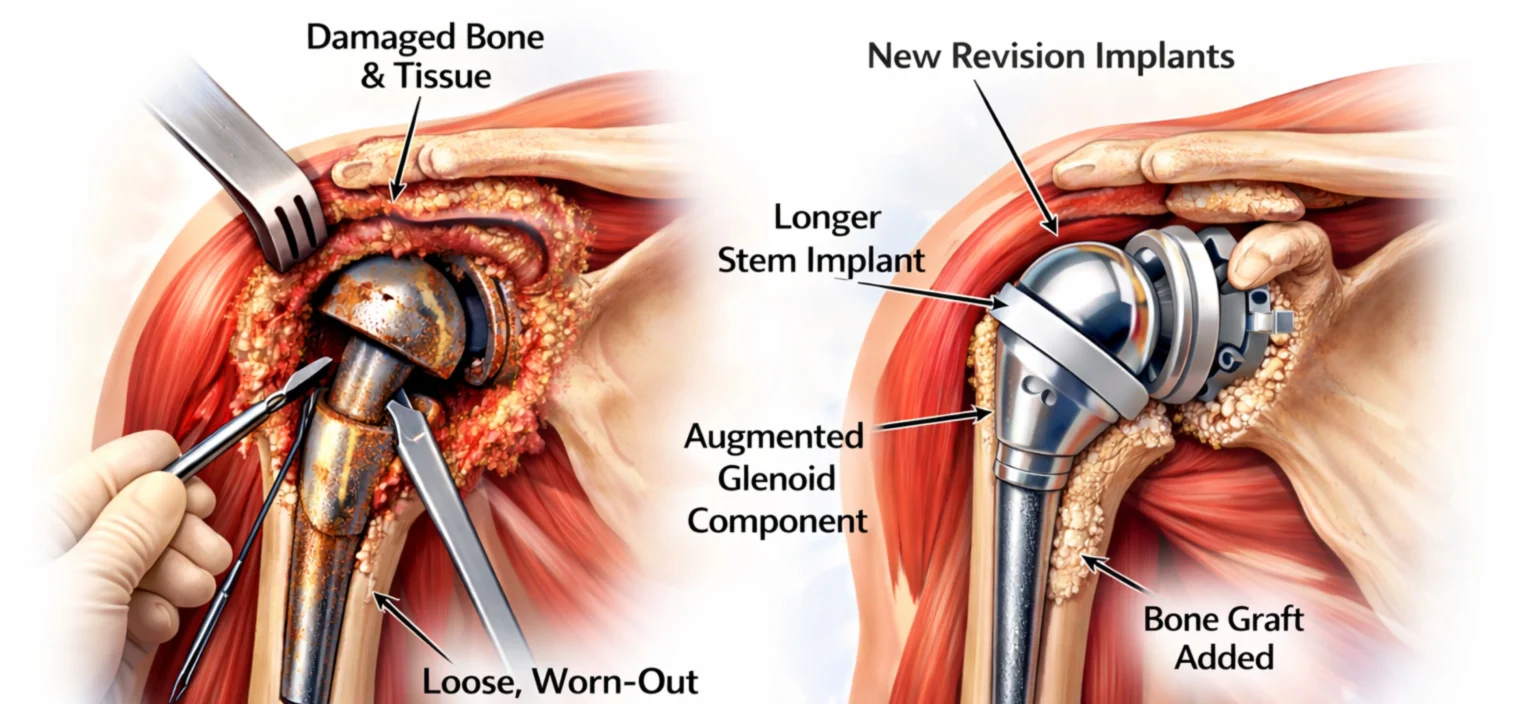
Revision Shoulder Replacement – Restoring Function After Failed Shoulder Surgery
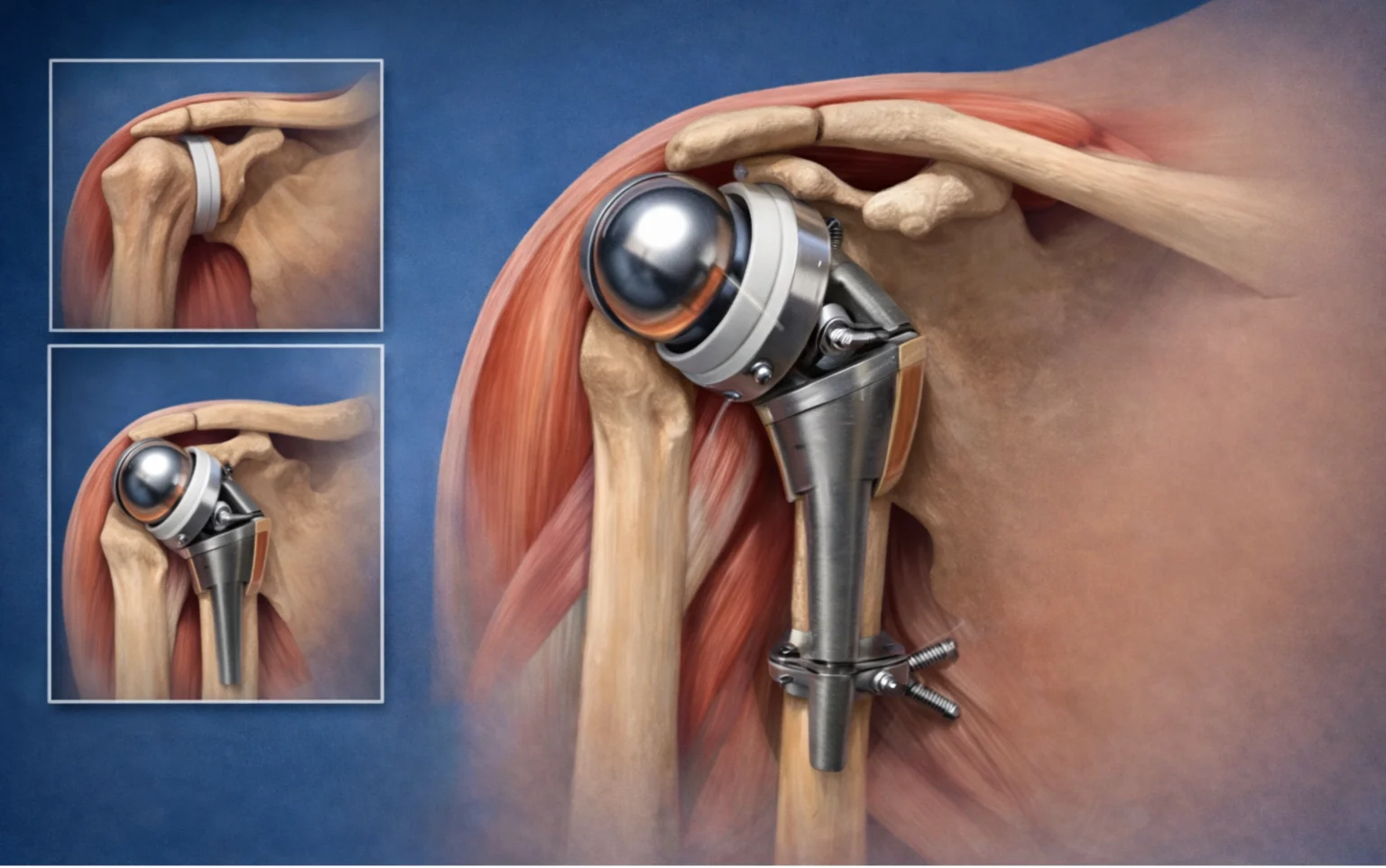
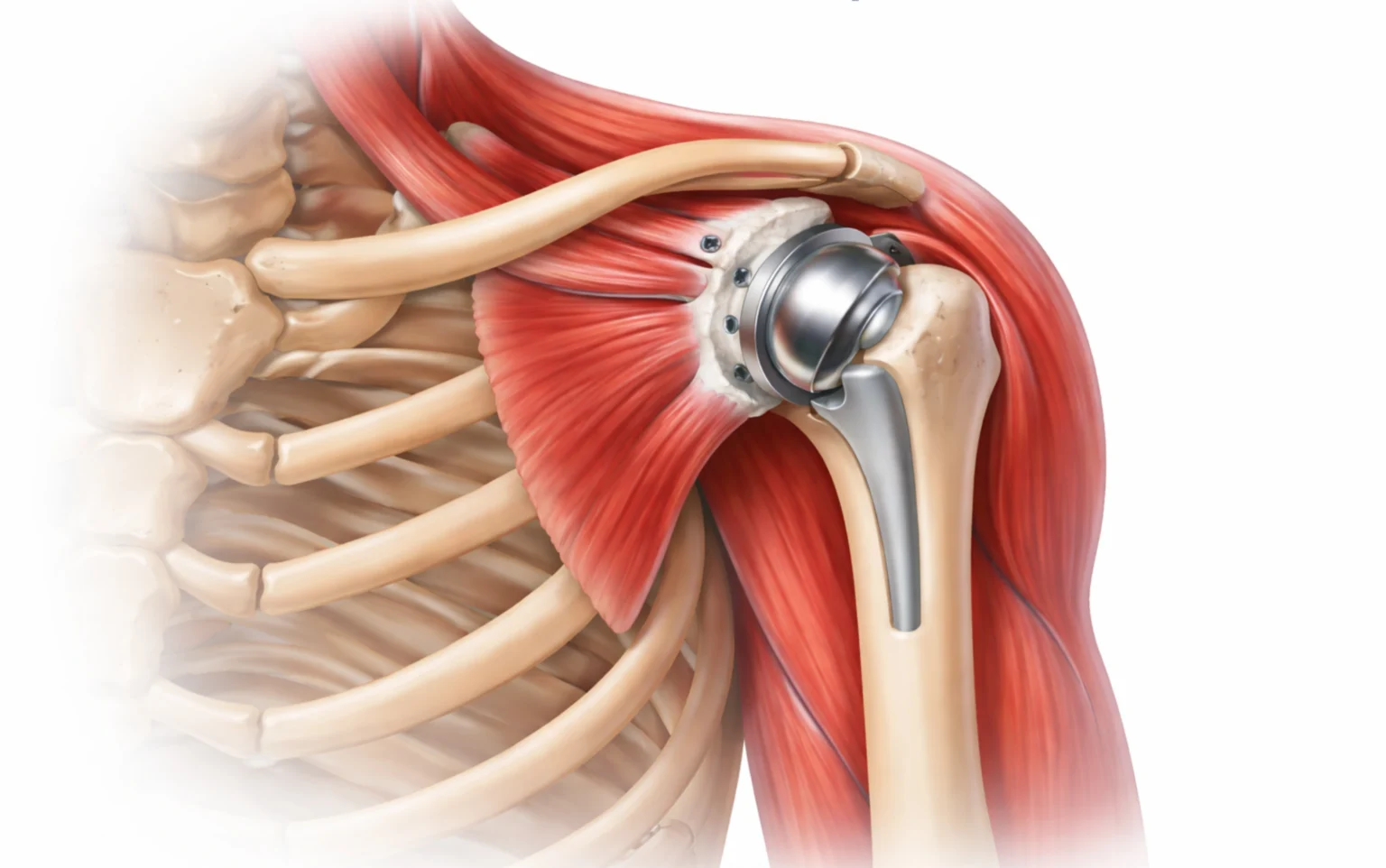
Revision shoulder replacement is a specialised procedure performed when a previous shoulder replacement—whether anatomic or reverse—no longer functions properly. Over time, implants may loosen, wear out, or fail due to trauma, infection, instability, or tissue damage. A revision procedure replaces or repairs the existing components, restoring stability, reducing pain, and improving shoulder function.
This advanced surgery requires expert evaluation, precise planning, and experience in complex shoulder reconstruction to ensure long-term success.
What Is Revision Shoulder Replacement?
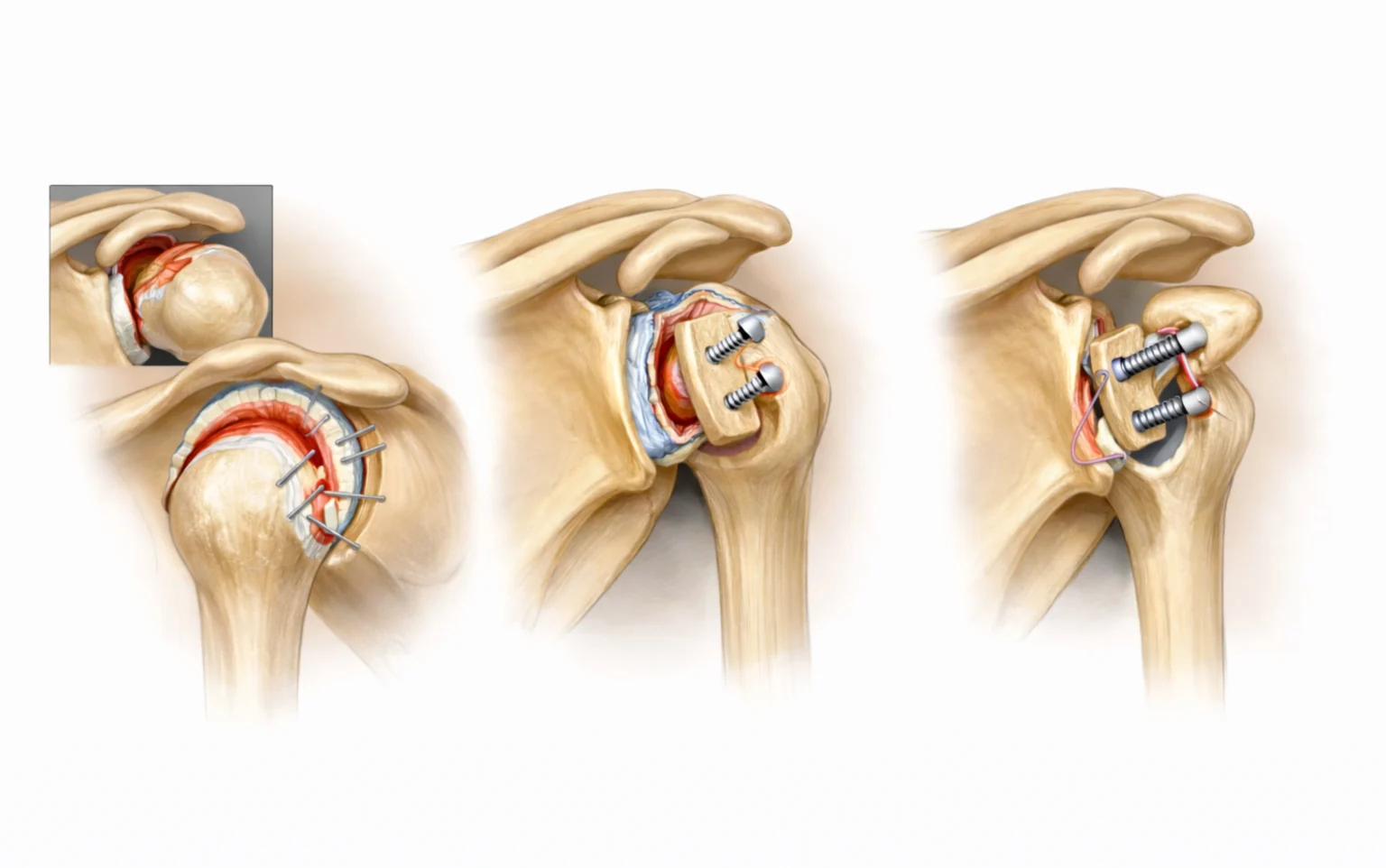
Revision shoulder replacement involves removing some or all parts of a previous shoulder implant and replacing them with new components. Depending on the patient’s condition, the procedure may include:
Replacing loose or worn-out implants
Converting an anatomic replacement to a reverse replacement
Treating infection and reconstructing the joint
Correcting instability, stiffness, or implant malposition
Rebuilding bone loss with grafts or specialized implants
The goal is to restore comfort and improve shoulder movement when a prior surgery has failed or deteriorated.
When Is Revision Shoulder Replacement Needed?
You may require revision surgery if any of the following issues develop:
Persistent or increasing shoulder pain
Implant loosening or wear
Instability or frequent dislocations
Stiffness or restricted movement
Infection around the implant
Bone loss or fracture around the implant
Rotator cuff failure after initial replacement
Mechanical failure of implants or components
These problems may arise months or years after the original surgery, and timely evaluation is essential.
Common Causes of Implant Failure
Revision surgery may be required due to:
Natural wear and tear of implants
Trauma or falls damaging the joint
Infection weakening the bone or implant
Poor rotator cuff function
Improper implant positioning
Implant loosening due to bone loss
Progressive arthritis in surrounding tissues
A thorough assessment helps determine whether full or partial revision is needed.

How the Revision Procedure Works
1. Detailed Evaluation & Imaging
Advanced imaging—X-rays, CT scans, MRI, or lab tests—helps identify implant condition, bone quality, and any infection.
2. Comprehensive Surgical Planning
A personalised plan is created based on causes of failure, implant type, bone loss, and overall shoulder function.
3. Revision Shoulder Replacement Surgery
The surgeon removes damaged or loose implants, treats bone loss if present, and places new components. In many cases, converting to a reverse shoulder replacement improves stability and function.
4. Rehabilitation & Physiotherapy
A structured recovery plan focuses on pain control, improved movement, strengthening, and gradual return to activity.
Benefits of Revision Shoulder Replacement
Significant reduction in chronic or recurrent pain
Improved stability and shoulder strength
Correction of implant-related complications
Enhanced range of motion over time
Better quality of life and daily function
Long-lasting results with modern implant technology
Who Can Benefit Most?
Revision shoulder replacement is ideal for patients who:
Have pain or dysfunction after previous shoulder replacement
Experience implant loosening, instability, or mechanical failure
Developed an infection around the shoulder prosthesis
Have fractured bone around the implant
Require conversion from anatomic to reverse replacement
Haven’t improved with conservative treatments
Revision Shoulder Replacement in Indore with Dr. Devansh Goyal
Revision shoulder replacement is a complex procedure performed in only a few centres. Dr. Devansh Goyal, trained in advanced shoulder arthroplasty within the UK NHS, evaluates and treats failed or painful shoulder replacements at Bombay Hospital, Indore.
Frequently Asked Questions
Why might a shoulder replacement fail?
Causes include loosening, instability, rotator cuff failure after anatomic replacement, infection, fracture or wear.
What are the signs of a failed shoulder replacement?
Increasing pain, loss of movement, instability or a clunking sensation should be checked.
Is revision usually to a reverse shoulder replacement?
Often, yes — especially when the rotator cuff is no longer working. The plan depends on bone stock and the cause of failure.
How is revision planned?
With X-rays, CT scans and tests to exclude infection, and with special implants available during surgery.
Is recovery slower than first-time replacement?
Usually yes, but many patients achieve good pain relief and useful function.
Book an Appointment
If you are experiencing persistent shoulder pain after previous surgery, or suspect implant-related problems, a specialist evaluation can help determine whether revision shoulder replacement is right for you.
Schedule your consultation with Dr. Devansh Goyal today.
Book a consultation with Dr. Devansh Goyal at Bombay Hospital, Vijay Nagar, Indore.