

PCL & Multi-Ligament Injury Management
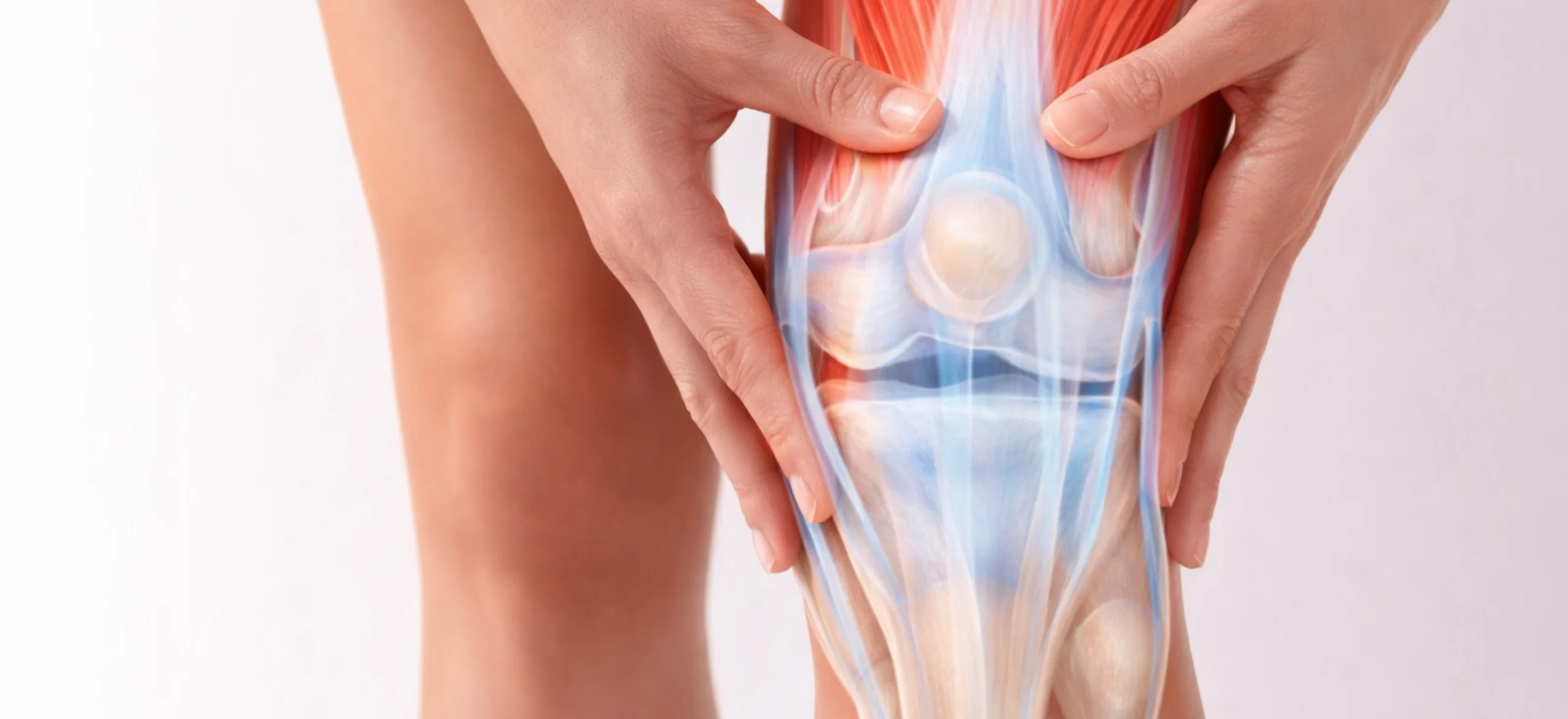
Posterior Cruciate Ligament (PCL) and multi-ligament knee injuries are complex conditions that affect the stability and overall function of the knee joint. These injuries often occur due to high-impact trauma, sports accidents, or severe twists to the knee. Early diagnosis and specialised treatment are essential to restore mobility, reduce long-term complications, and help patients return to active living.
What Is a PCL Injury?
The Posterior Cruciate Ligament (PCL) is one of the strongest ligaments in the knee. It prevents the shinbone from moving backward and works with other ligaments to stabilise the joint.
A PCL tear may occur due to:
Direct blow to the front of the knee (e.g., dashboard injury)
Falling on a bent knee
Sudden twisting or hyperextension of the knee
Contact sports such as football or basketball
Common symptoms include pain, swelling, difficulty kneeling, instability, and reduced range of motion.
What Are Multi-Ligament Knee Injuries?
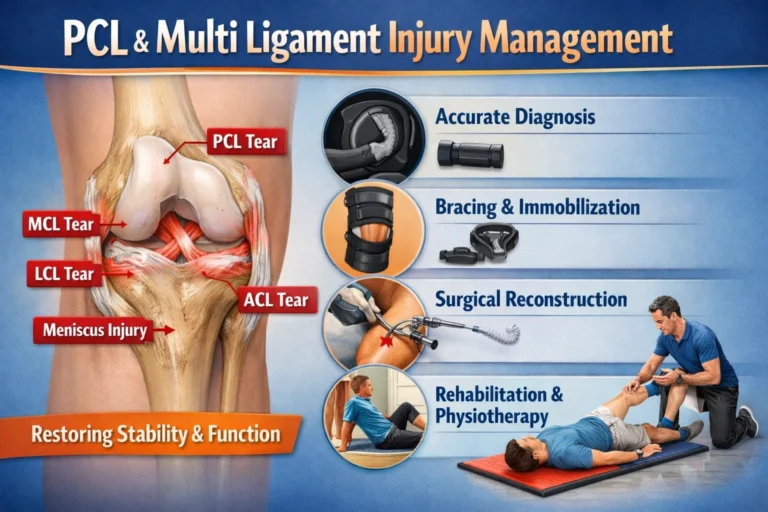
Multi-ligament injuries involve damage to two or more knee ligaments—such as the ACL, PCL, MCL, LCL, and sometimes the posterolateral corner (PLC).
These injuries usually result from severe trauma, including:
Road traffic accidents
High-impact sports collisions
Falls from height
Knee dislocations
Patients often experience significant instability, swelling, and difficulty bearing weight.
When Do You Need PCL or Multi-Ligament Surgery?
Surgical treatment is recommended when:
The knee feels unstable or “gives way”
Pain and swelling persist despite physiotherapy
Multiple ligaments are torn
There is associated meniscus or cartilage damage
Patients need to return to sports or physically demanding work
Early surgical intervention helps restore stability and prevents long-term complications such as arthritis.
How PCL & Multi-Ligament Reconstruction Works
1. Comprehensive Evaluation
Advanced imaging (MRI, X-ray) is used to assess the extent of ligament damage and plan the surgical approach.
2. Graft Selection
Depending on the injury pattern, the surgeon may use:
Hamstring tendon graft
Quadriceps tendon graft
Patellar tendon graft
Donor tissue (allograft) in select cases
3. Arthroscopic (Keyhole) Surgery
Most procedures are performed using minimally invasive arthroscopy for:
Reduced scarring
Faster recovery
Less postoperative discomfort
4. Ligament Reconstruction
Each torn ligament is reconstructed to restore the natural biomechanics of the knee.
Tunnels are created in the bone, and grafts are positioned to mimic the original ligament structure.
5. Stable Fixation
The grafts are securely fixed to ensure long-term stability as they heal and integrate with the bone.
Benefits of PCL & Multi-Ligament Reconstruction
Restores knee stability and function
Prevents recurrent knee dislocations
Reduces the risk of long-term joint damage
Supports return to sports and active lifestyle
Minimally invasive approach for faster healing
Improves walking, bending, and weight-bearing ability
Recovery After Surgery
A personalised rehabilitation program is essential for optimal recovery:
Early Phase
Pain control
Swelling reduction
Gentle motion exercises
Strengthening Phase
Muscle strengthening
Improved knee flexibility
Controlled weight-bearing
Balance & Proprioception Training
Enhances stability
Prepares the knee for daily activities
Return-to-Sport Program
Gradual running
Plyometrics
Advanced functional training
Full recovery typically ranges from 9–12 months, depending on the severity of the injury and commitment to physiotherapy.
Book an Appointment
If you suspect a PCL or multi-ligament injury, expert evaluation is crucial for a successful recovery.
Schedule a consultation with Dr. Devansh Goyal to discuss the most effective treatment options for your knee.
📞 Phone: +91 98765 43210
🗓️ Book Now: Contact to schedule your appointment