
Meniscus tear treatment
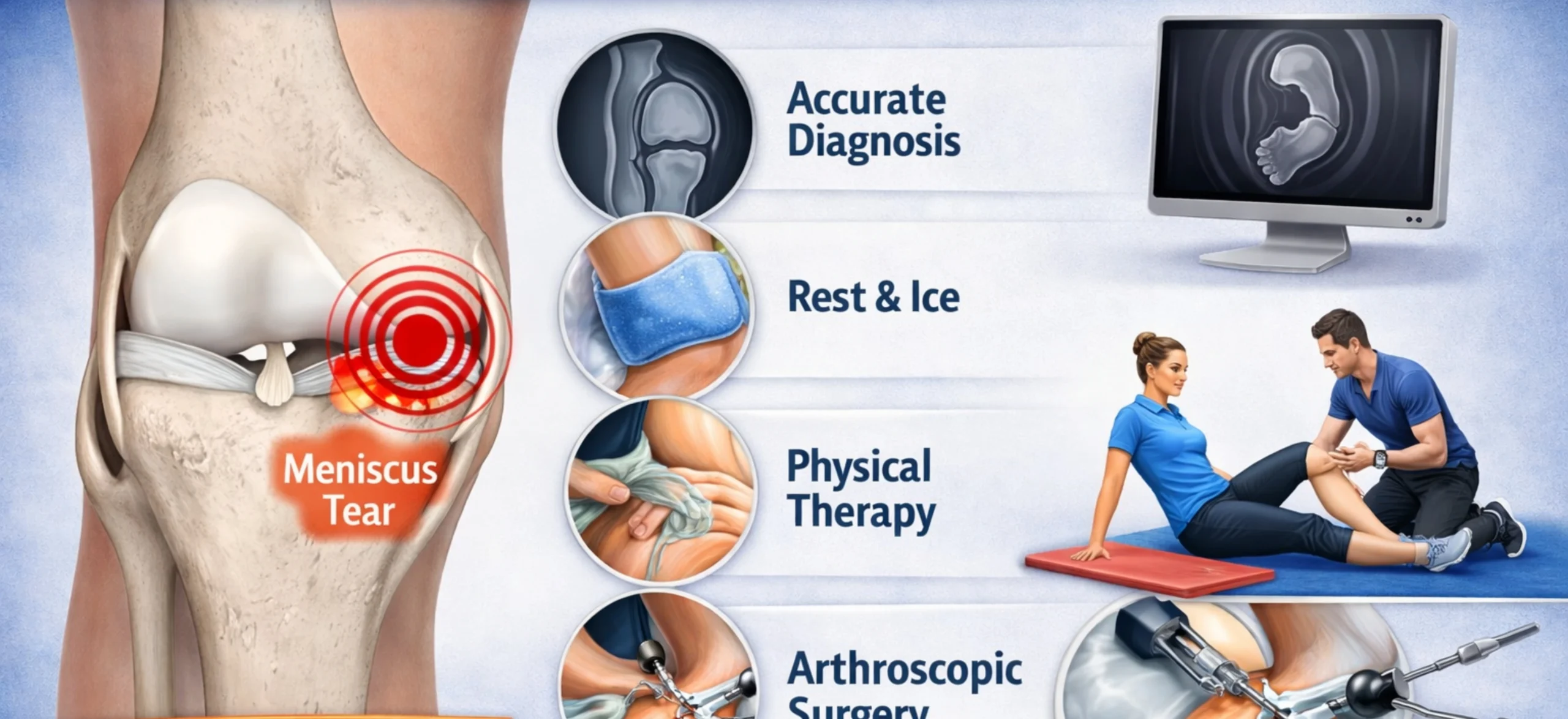
A meniscus tear is one of the most common knee injuries, affecting people of all ages—particularly athletes, active individuals, and those involved in sudden twisting movements. The meniscus acts as a shock absorber between the femur and tibia, helping stabilise and protect the knee joint. When it tears, you may experience pain, swelling, locking, and difficulty moving the knee.
Prompt diagnosis and proper treatment are essential to restore knee function and prevent long-term joint damage.
What Is a Meniscus Tear?
The meniscus is a C-shaped cartilage structure inside the knee that provides cushioning and stability. A tear can occur due to:
Sudden twisting of the knee
Pivoting during sports
Deep squatting or heavy lifting
Degenerative changes with age
Direct trauma or accidents
Symptoms commonly include:
Knee pain, swelling, stiffness, catching or locking of the knee, difficulty bending or straightening, and a feeling of instability.
When Do You Need Meniscus Treatment?
You may require medical or surgical treatment if you have:
Persistent knee pain
Swelling that does not settle
Locking or clicking sensations
Difficulty fully bending or straightening the knee
Pain during walking, climbing stairs, or squatting
A tear confirmed on MRI
Failure of physiotherapy or conservative measures
Athletes and physically active individuals often need early intervention to return to their routine safely.
Types of Meniscus Tears
Different tears require specific management:
Vertical or longitudinal tear
Radial tear
Horizontal tear
Flap tear
Complex tear
Root tear
Your treatment plan depends on the type, location, and severity of the tear.
How Meniscus Tear Treatment Works
1. Initial Assessment
A detailed clinical examination and MRI scan help determine the exact type and extent of the injury.
2. Non-Surgical (Conservative) Treatment
Suitable for minor or degenerative tears:
Rest, ice, compression, elevation (RICE)
Anti-inflammatory medication
Physiotherapy for strength and mobility
Knee braces for support
3. Arthroscopic Meniscus Surgery
Minimally invasive keyhole surgery is recommended for symptomatic or complex tears.
Surgical options include:
Meniscus Repair
The torn meniscus is sutured and preserved
Ideal for younger patients and tears with good healing potential
Helps maintain long-term knee health
Partial Meniscectomy
Only the damaged part of the meniscus is removed
Reduces pain and improves mobility
Performed when repair is not possible
Meniscus Root Repair / Transplant (Specialized Cases)
Reconstruction of the meniscus root
Prevents rapid cartilage degeneration
Meniscus transplant considered for severe or repeated tears
Benefits of Meniscus Treatment
Reduces pain and swelling
Restores knee movement and stability
Improves ability to walk, run, and bend
Prevents long-term damage to cartilage
Minimally invasive with quick recovery (arthroscopy)
Allows athletes to return to sports safely
Recovery After Meniscus Treatment
A structured rehabilitation program plays a crucial role:
Early Phase
Pain and swelling control
Gentle range-of-motion exercises
Strengthening Phase
Quadriceps and hamstring strengthening
Controlled weight-bearing
Functional Training
Improving balance and knee stability
Sport-specific conditioning
Return to Sports
Usually between 3–6 months depending on the treatment and tear type
Regular follow-ups ensure optimal healing.
Book an Appointment
If you’re experiencing knee pain or suspect a meniscus tear, expert evaluation can help you choose the right treatment for fast recovery.
Schedule a consultation with Dr. Devansh Goyal for personalised meniscus injury management.
📞 Phone: +91 98765 43210
🗓️ Book Now: Contact to schedule your appointment