Reverse Shoulder Replacement
Reverse Shoulder Replacement – Advanced Solution for Severe Shoulder Damage
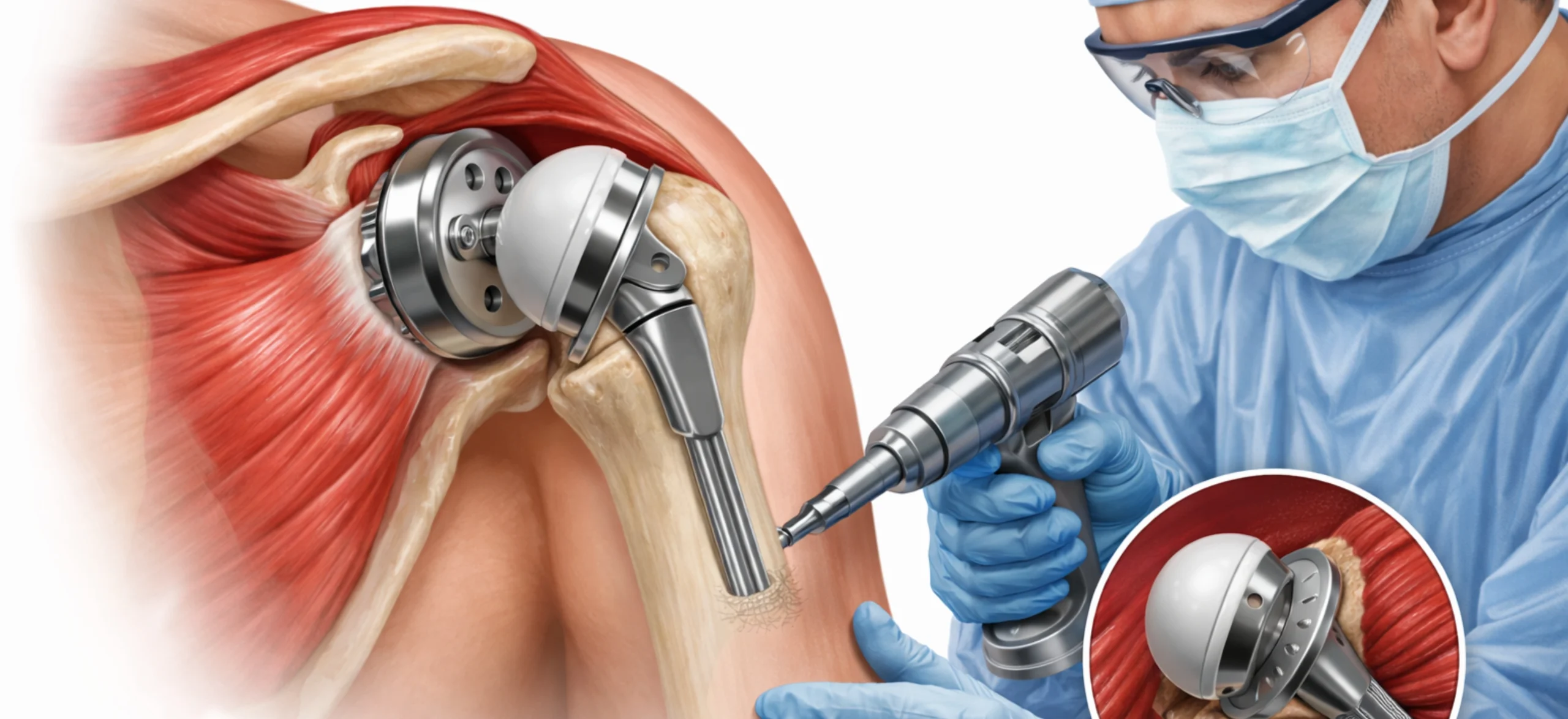
Reverse shoulder replacement is an advanced surgical procedure designed for patients with complex shoulder conditions, especially when the rotator cuff is severely torn or non-functional. By reversing the ball-and-socket orientation of the shoulder joint, this technique allows the deltoid muscle—not the damaged rotator cuff—to power and stabilize shoulder movement. It offers significant pain relief, improved strength, and restored mobility for individuals who have struggled with long-standing shoulder dysfunction.
What Is Reverse Shoulder Replacement?
In a reverse shoulder replacement, the natural structure of the shoulder joint is reversed:
A ball-shaped implant is placed on the shoulder blade (scapula).
A socket-shaped implant is placed at the top of the upper arm bone (humerus).
This reversed configuration enables the deltoid muscle to lift and move the arm, compensating for a torn or irreparable rotator cuff.
Reverse shoulder replacement is especially effective when conventional shoulder replacement or arthroscopic repair is not suitable.
Conditions Treated with Reverse Shoulder Replacement
This procedure is recommended for patients with:
Massive, irreparable rotator cuff tears
Cuff tear arthropathy (arthritis caused by rotator cuff damage)
Severe shoulder arthritis with tendon deficiency
Failed previous shoulder surgeries
Complex shoulder fractures (especially in older adults)
Chronic shoulder instability with poor rotator cuff function
Signs You May Need Reverse Shoulder Replacement
You may benefit from this procedure if you experience:
Persistent shoulder pain that limits daily function
Difficulty lifting the arm due to rotator cuff weakness
Pain at rest or during sleep
Grinding, catching, or locking sensations
Limited or declining shoulder mobility
Arthritis symptoms combined with a torn rotator cuff
If non-surgical treatments such as medications, injections, or physiotherapy have not worked, reverse replacement may provide long-term relief.
How the Procedure Works
1. Clinical Evaluation & Imaging
X-rays, MRI, or CT scans help assess bone structure, rotator cuff integrity, and joint degeneration.
2. Personalized Surgical Planning
Your treatment plan is customized based on bone quality, age, lifestyle, and the extent of tendon damage.
3. Reverse Shoulder Replacement Surgery
The damaged joint surfaces are removed and replaced with specially designed implants that reverse the ball-and-socket arrangement. This configuration lets the deltoid muscle take over, improving strength and function.
4. Rehabilitation & Physiotherapy
A structured program focuses on safe arm elevation, mobility restoration, and strengthening the deltoid for optimal function.
Benefits of Reverse Shoulder Replacement
Significant reduction in chronic shoulder pain
Improved arm elevation and functional range
Stability restored even without a functioning rotator cuff
Reliable long-term results
Lower risk of certain complications seen in traditional replacements
Enhanced ability to perform daily activities
Who Can Benefit Most?
Reverse shoulder replacement is ideal for:
Older adults with severe arthritis and tendon tears
Patients with irreparable rotator cuff injuries
Individuals with failed prior rotator cuff repairs or replacements
Those with complex fractures of the upper arm bone
People seeking improvement after long-term shoulder dysfunction
Book an Appointment
If severe shoulder pain or limited motion is affecting your daily life, a specialist evaluation can determine whether reverse shoulder replacement is the right option for you.
Schedule your consultation with Dr. Devansh Goyal today.
📞 Phone: +91 98765 43210
🗓️ Book Now: Contact to schedule your appointment