Shoulder Instability (Dislocation) Surgery - Bankart Repair | Bone Block Procedure | Latarjet Surgery
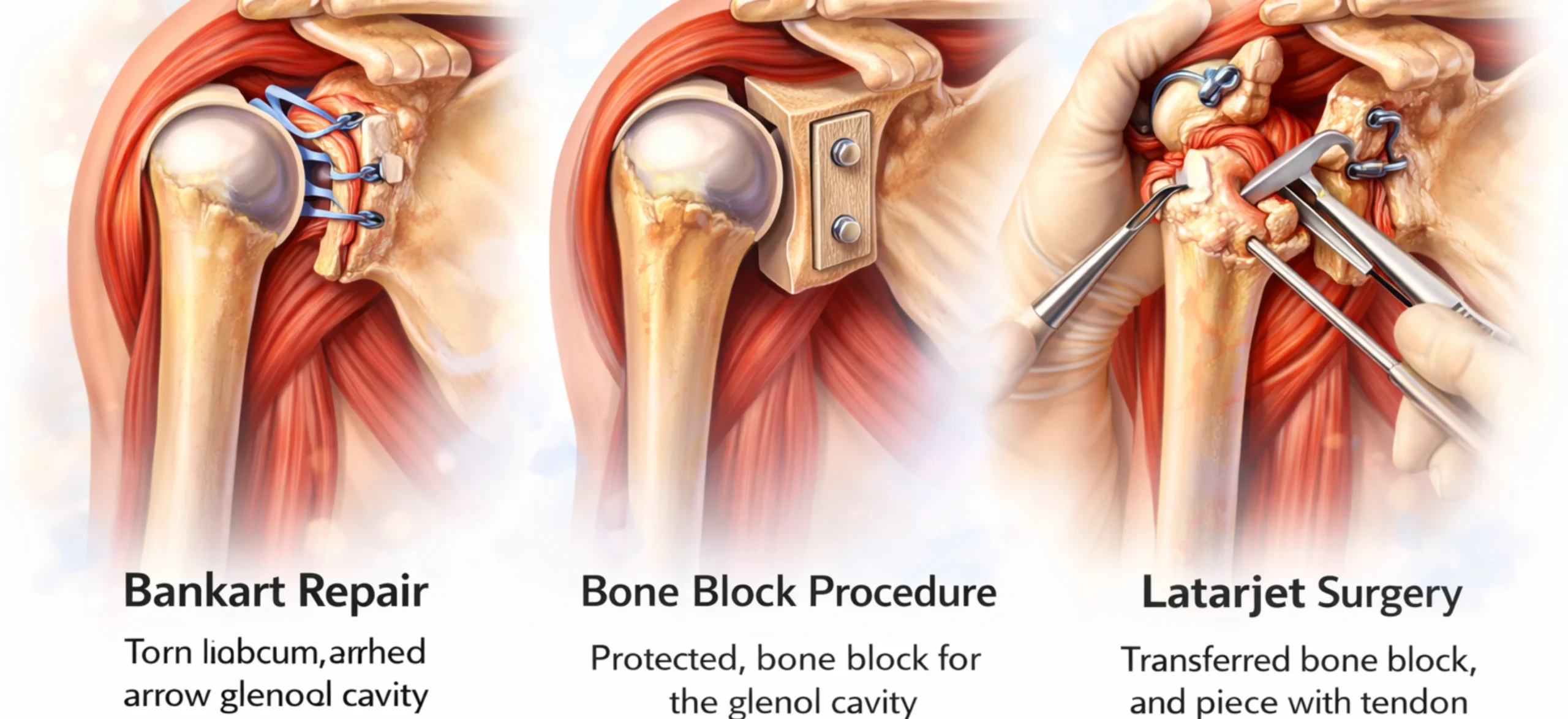
Shoulder instability occurs when the shoulder joint repeatedly slips out of place due to torn ligaments, bone loss, or previous dislocations. For patients who experience frequent shoulder dislocations or persistent feelings of instability, surgical treatment offers long-term stability, reduced pain, and a safer return to sports and daily activities.
Bankart Repair, Bone Block Procedures, and the Latarjet Surgery are the most reliable surgical techniques for restoring shoulder stability and preventing recurrent dislocations.
Understanding Shoulder Instability
The shoulder is the most mobile—and therefore the most unstable—joint in the body. Repeated dislocations can lead to:
Labral tears (Bankart lesions)
Stretched or damaged ligaments
Bone loss on the glenoid (socket) or humeral head
Weakness and persistent fear of dislocation
When non-surgical treatments fail, surgical stabilization becomes the best option.
1. Bankart Repair (Arthroscopic Stabilization)
What It Is
A minimally invasive procedure that repairs the torn labrum and tightens the capsule to prevent the shoulder from slipping out again.
Ideal For
First-time or early recurrent dislocations
Soft-tissue Bankart lesions
Athletes with minimal bone loss
Young active individuals
How It Works
The torn labrum is reattached using suture anchors
Stretched ligaments are tightened
The normal anatomy of the shoulder is restored
Benefits
Minimally invasive (keyhole surgery)
Faster recovery and less pain
High success rate for soft-tissue instability
Maintains natural shoulder anatomy
2. Bone Block Procedure
What It Is
A reconstructive surgery used when the socket (glenoid) has lost bone from repeated dislocations. A bone graft is used to rebuild the lost bone, restoring stability.
Ideal For
Significant glenoid bone loss
Failed previous stabilization surgeries
Contact athletes with high risk of re-dislocation
How It Works
Bone graft (from iliac crest or distal tibia) is placed onto the deficient glenoid
Screws or fixation devices secure the bone block
Increases the size and depth of the socket
Benefits
Strong, reliable stabilization
Dramatically lower recurrence rates
Effective even in severe or chronic instability cases
3. Latarjet Surgery
What It Is
A specialized bone block procedure where a portion of the coracoid bone is transferred to the front of the shoulder socket to prevent dislocation.
Ideal For
High-demand athletes (rugby, kabaddi, weightlifting)
Recurrent dislocations with bone loss
Patients who failed previous Bankart repairs
Chronic shoulder instability
How It Works
The coracoid bone and attached muscles are transferred
Fixed to the front of the glenoid
Provides a triple stability effect:
Bone block increases socket size
Muscle sling prevents the shoulder from slipping
Ligament repair adds reinforcement
Benefits
One of the most reliable surgeries for shoulder instability
Extremely low recurrence rates
Excellent option for contact sports and heavy activity
Signs You May Need Instability Surgery
You may need surgical stabilization if you experience:
Repeated shoulder dislocations
Feeling of shoulder slipping or “giving way”
Pain during throwing or overhead movement
Loss of strength and confidence
Fear of dislocation during sports
Failure to improve with physiotherapy
Diagnosis & Treatment Planning
1. Clinical Evaluation
Assessment of shoulder strength, laxity, dislocation direction, and stability.
2. Imaging
X-rays to assess bone defects
MRI to view labral tears and ligament damage
CT scan for accurate bone loss measurement
3. Personalized Surgical Planning
Choice of procedure depends on:
Age and activity level
Amount of bone loss
Type and severity of instability
Sport or occupational demands
Whether previous surgeries have failed
Benefits of Shoulder Instability Surgery
Prevents future dislocations
Restores stability and confidence
Reduces pain and inflammation
Improves strength and shoulder mechanics
Allows safe return to sports and physical activity
Protects the joint from future damage and arthritis
Rehabilitation & Recovery
After surgery, recovery includes:
Sling support for protection
Early supervised physiotherapy
Gradual strengthening of the rotator cuff and scapular muscles
Return to sports in 4–6 months depending on the procedure
A structured rehabilitation plan is essential for long-term success.
Who Benefits the Most?
Athletes with shoulder instability
Individuals with confirmed tendon or labral tears
People with persistent pain unresponsive to therapy
Patients with fractures or severe arthritis
Those needing improved function for work or sports
Book an Appointment
If frequent shoulder dislocations or instability are affecting your life, a specialist evaluation can help determine the best surgical solution for long-term stability.
Schedule your consultation with Dr. Devansh Goyal to
📞 Phone: +91 98765 43210
🗓️ Book Now: Contact to schedule your appointment